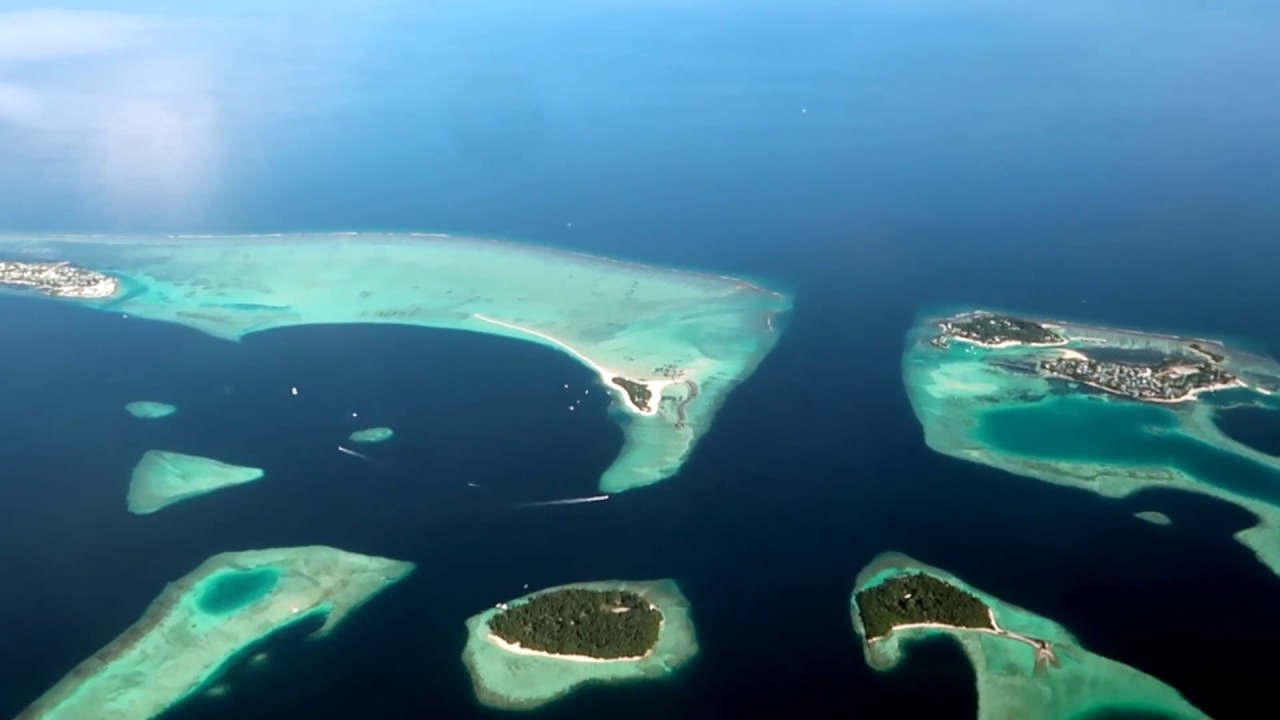
The Maldives is an island nation in the central Indian Ocean, made up of 26 natural atolls and more than 1,000 coral islands stretching across roughly 800 kilometres from north to south. From above, the atolls form distinct coral rings enclosing shallow lagoons in layered shades of blue. These islands were formed by coral reefs growing over ancient volcanic ridges, which is why the land is low-lying, sandy, and surrounded entirely by reef systems. The average elevation is just over one metre above sea level, making it one of the flattest countries in the world.
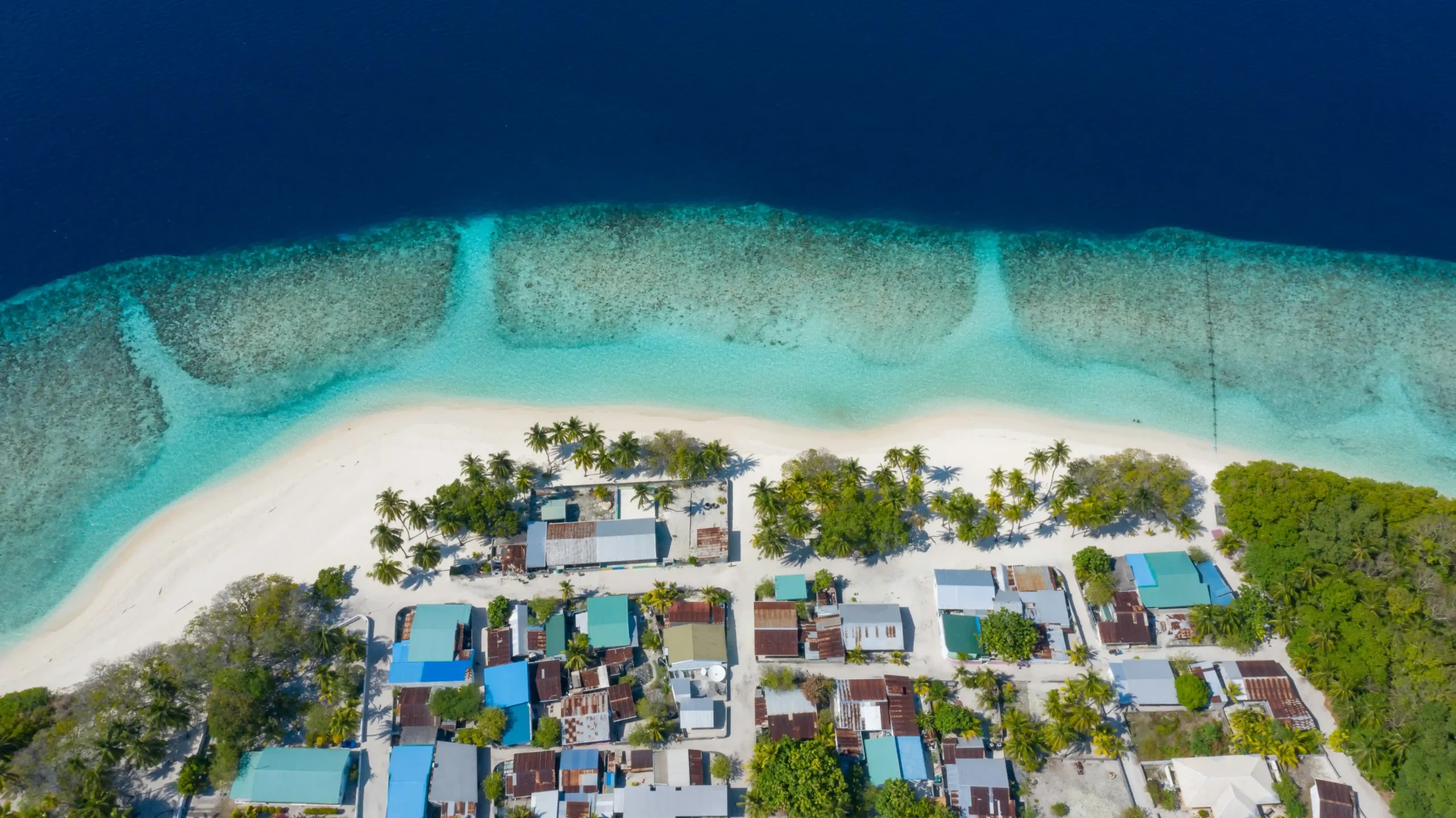
Fewer than 200 islands are inhabited. Each one functions as a small, self-sustaining community with its own harbour, mosque, school, health centre, and local shops. Some islands have long histories centred on fishing and boat-building, while others focus on farming or tourism. Many islands remain uninhabited — simple stretches of sand and palm trees used occasionally for agriculture, excursions, or left untouched.
Every island is protected by a surrounding coral reef. These reefs reduce wave impact, create calm lagoons, and support an exceptionally rich marine ecosystem. The geography is both delicate and functional — tides, monsoon winds, and reef structures all influence settlement patterns, building styles, and daily routines.
Although there are no bridges connecting islands, transport between them is well developed. The Maldives has numerous domestic airports across different atolls, allowing quick internal flights between regions. Seaplanes also operate widely, particularly for resort transfers, landing directly on lagoons where runways are not available. For shorter distances, speedboats are commonly used, especially within the central atolls. The expanding RTL (Raajje Transport Link) ferry network now connects many inhabited islands with scheduled, affordable services, making inter-island travel more accessible than ever.
Movement here happens by sea and air rather than by road — but it is organised and efficient. While the geography is shaped by water, the infrastructure in place makes exploring different atolls smooth and practical, allowing travellers to experience the diversity of the islands without difficulty.