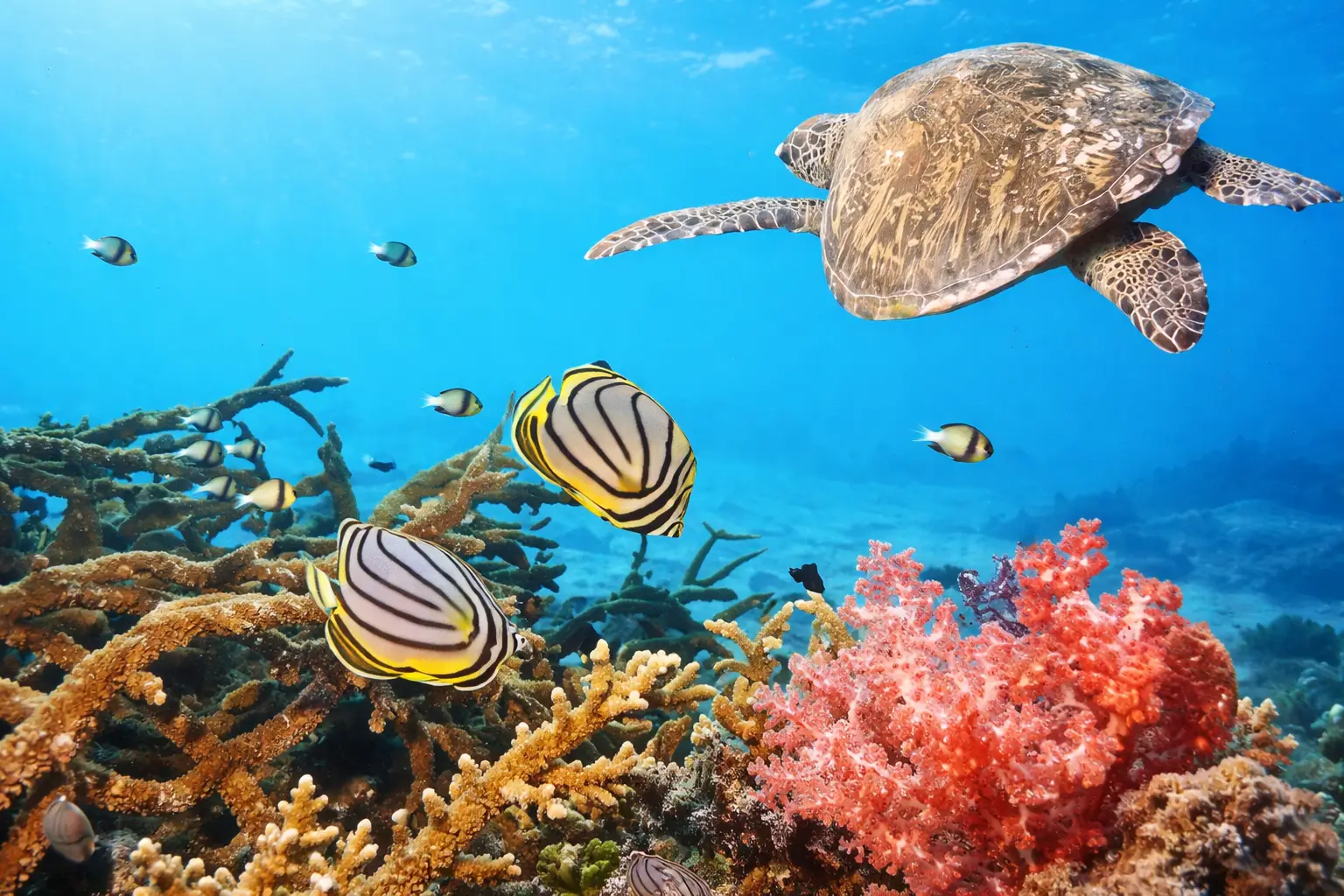
The Maldives is built on coral reefs, and its marine ecosystem is one of the most diverse in the Indian Ocean. Each island is surrounded by a fringing reef that protects the shoreline and creates calm lagoons, while outer reef walls and channels open into deeper ocean waters. This reef structure supports an extraordinary range of marine life and makes snorkelling and diving accessible directly from many islands.
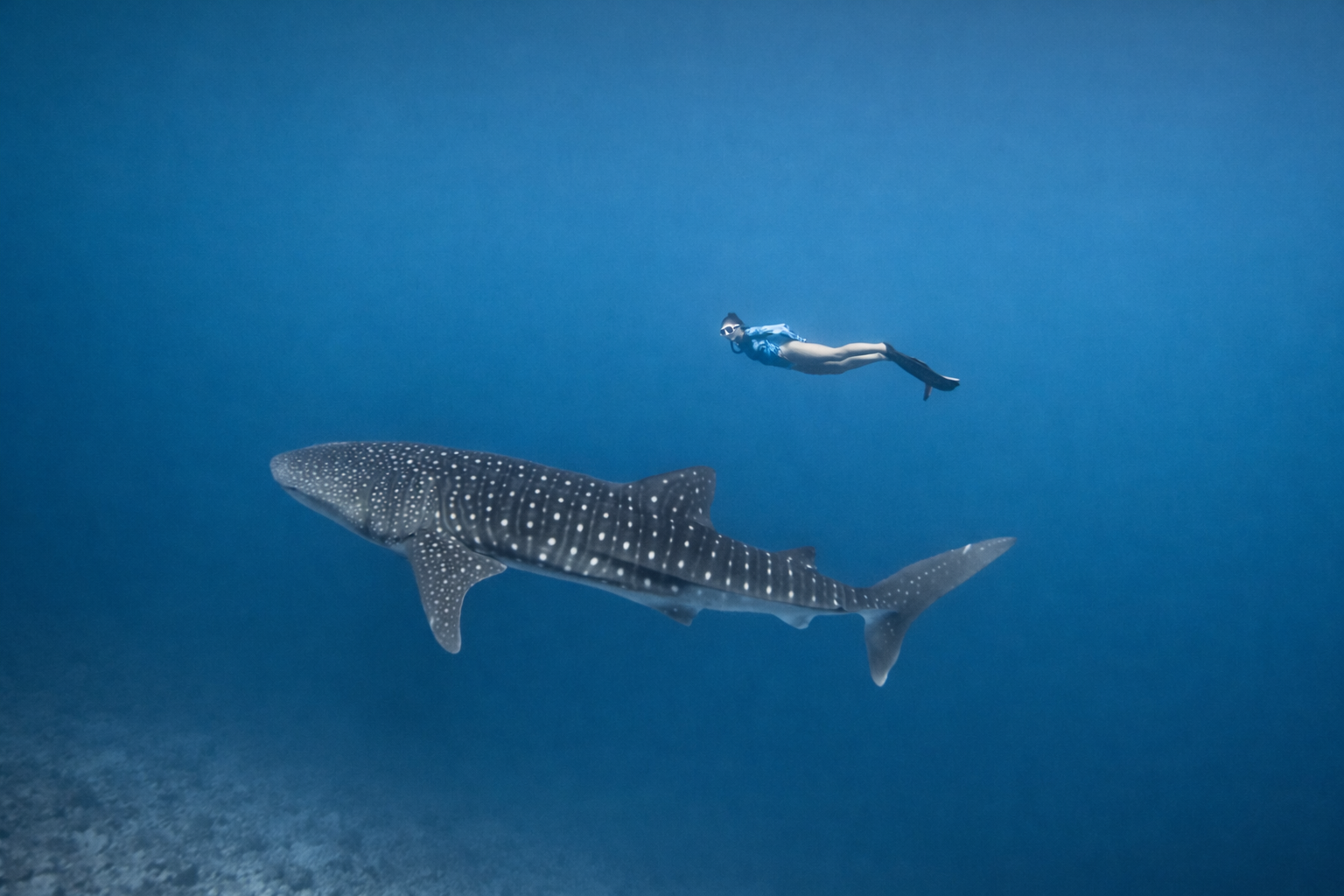
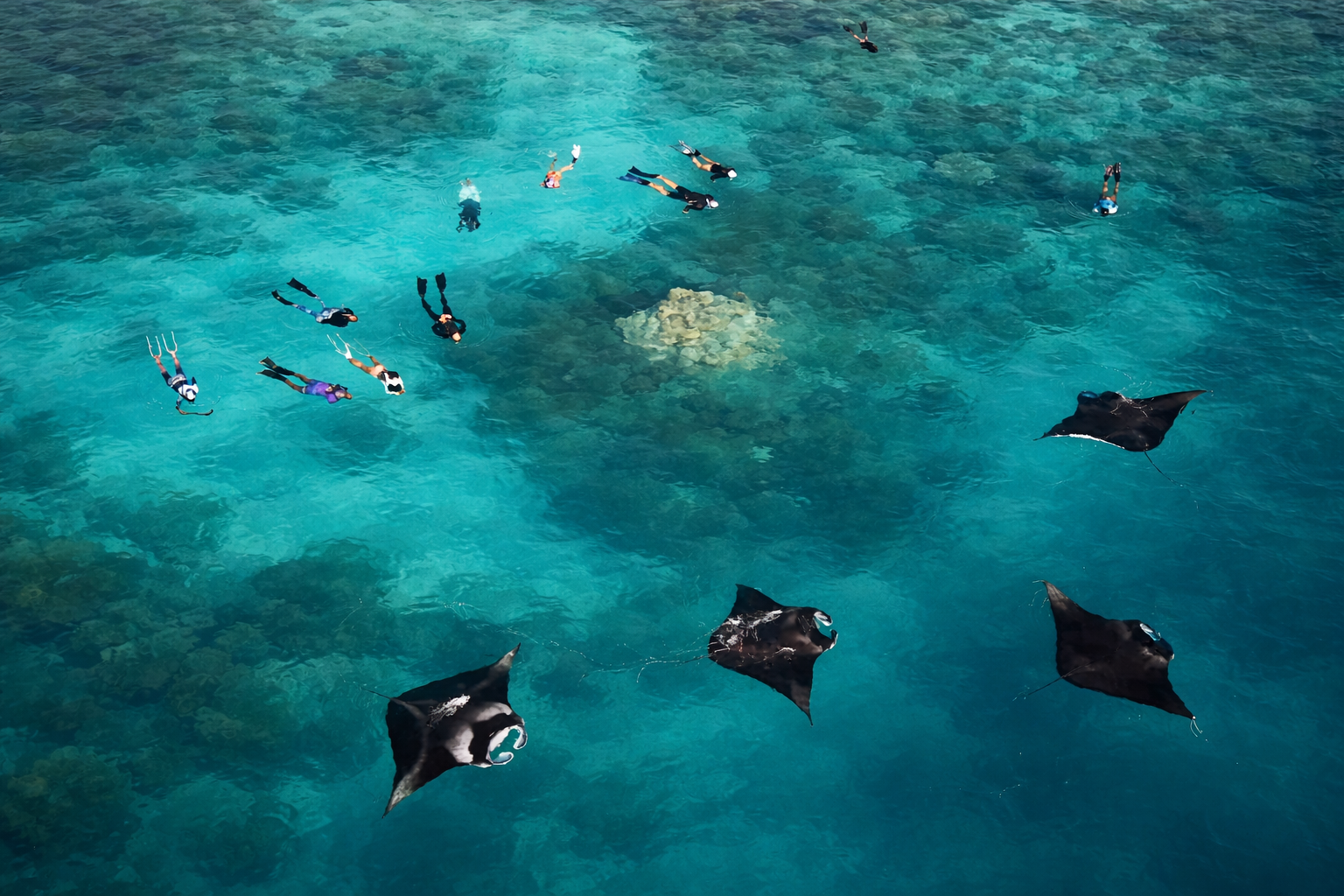
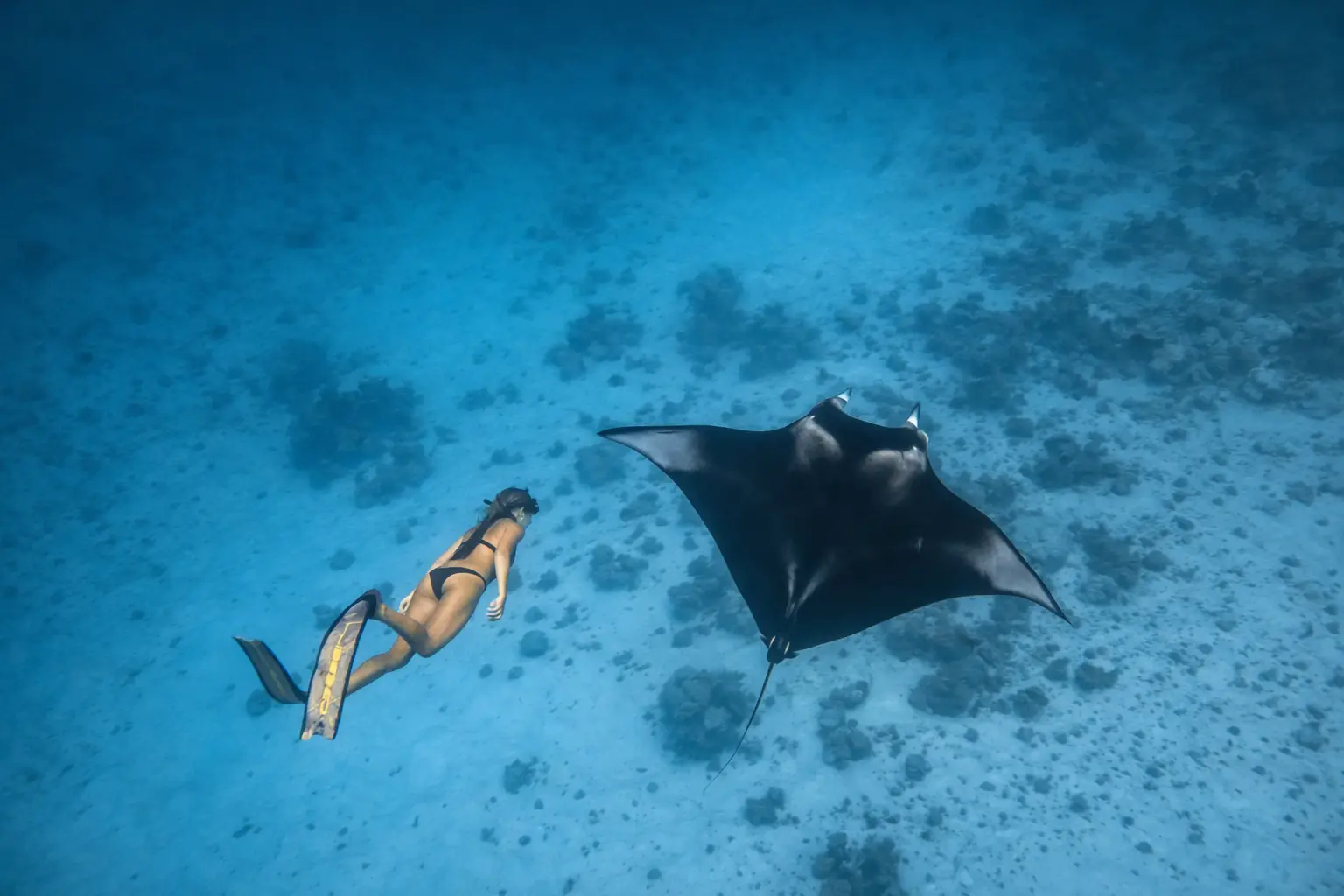
More than 2,000 species of fish have been recorded in Maldivian waters. Reef sharks, rays, sea turtles, moray eels, parrotfish, and schools of reef fish are common sights. The Maldives is also internationally known for manta rays and whale sharks. Certain atolls, particularly in the central and southern regions, offer seasonal plankton-rich conditions that attract large populations of manta rays. In places like Fuvahmulah, oceanic species such as tiger sharks and other pelagic fish can be encountered year-round due to the island’s unique underwater topography.
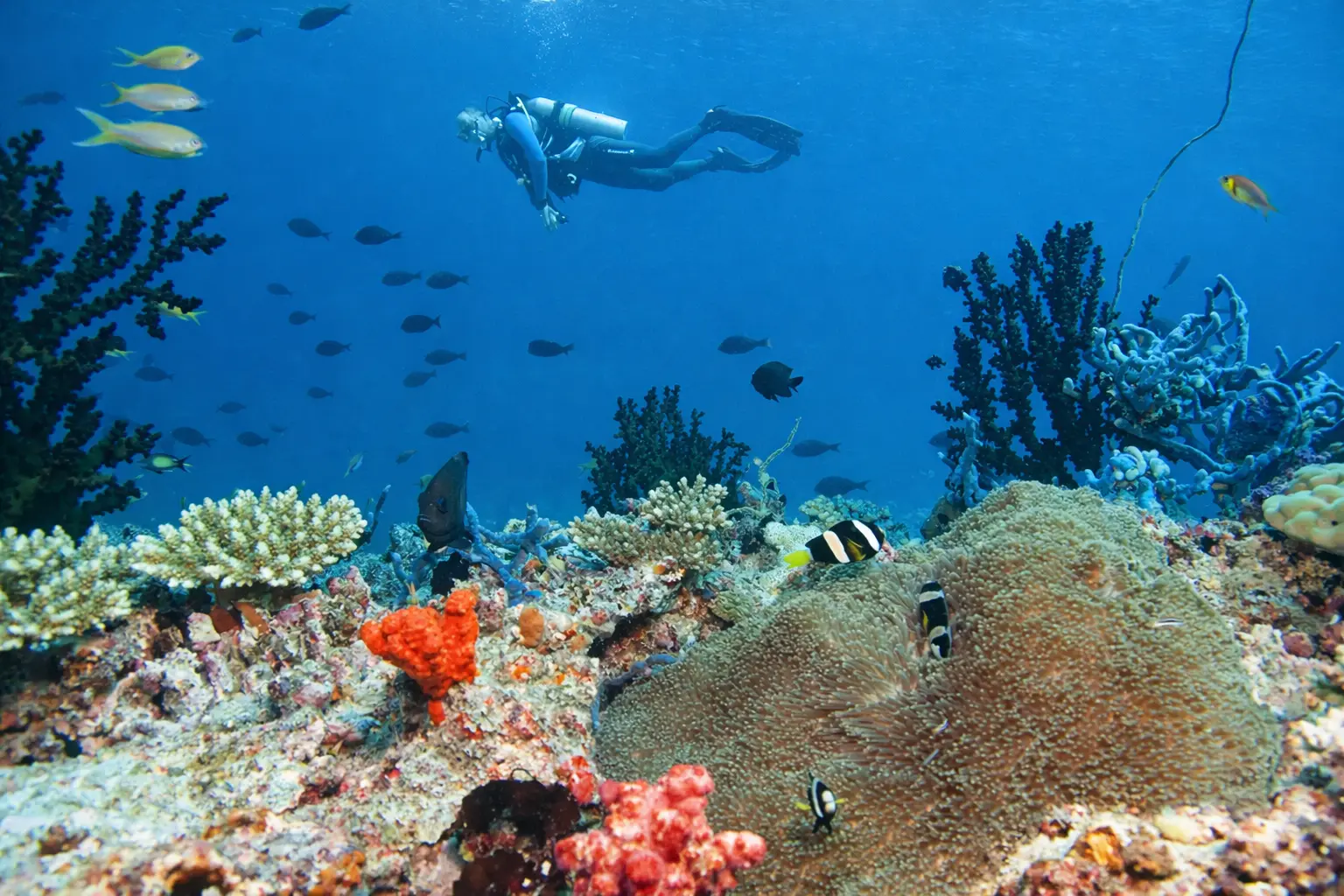
Coral reefs here are not only visually striking but ecologically critical. Hard corals form the structural foundation of the reef, while soft corals add colour and movement. These ecosystems support fisheries, protect islands from erosion, and sustain tourism. Like many reef systems globally, Maldivian reefs face pressures from rising sea temperatures and bleaching events, but conservation efforts and reef monitoring initiatives are ongoing in various atolls
For visitors, marine life is not confined to specialised dive trips. Snorkelling in shallow lagoons, reef edges, and sandbank drop-offs often reveals vibrant underwater life within minutes of entering the water. The clarity of the ocean, combined with the reef’s accessibility, is one of the defining features of the Maldives as a destination.
Understanding the reef system adds depth to the experience. The lagoons, channels, and reef walls are not just scenic — they are living systems that shape both the geography of the islands and the livelihoods of the people who depend on them.