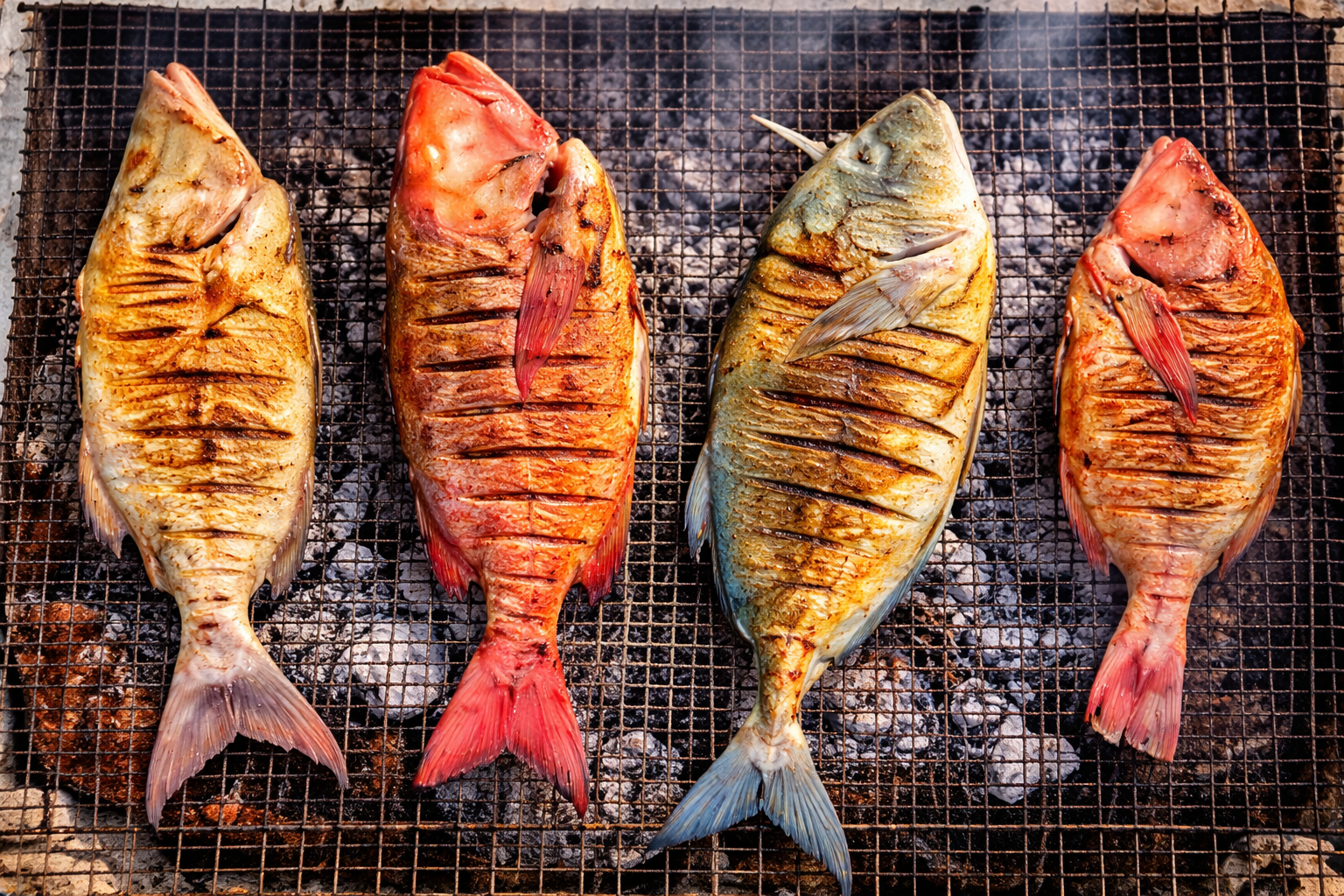
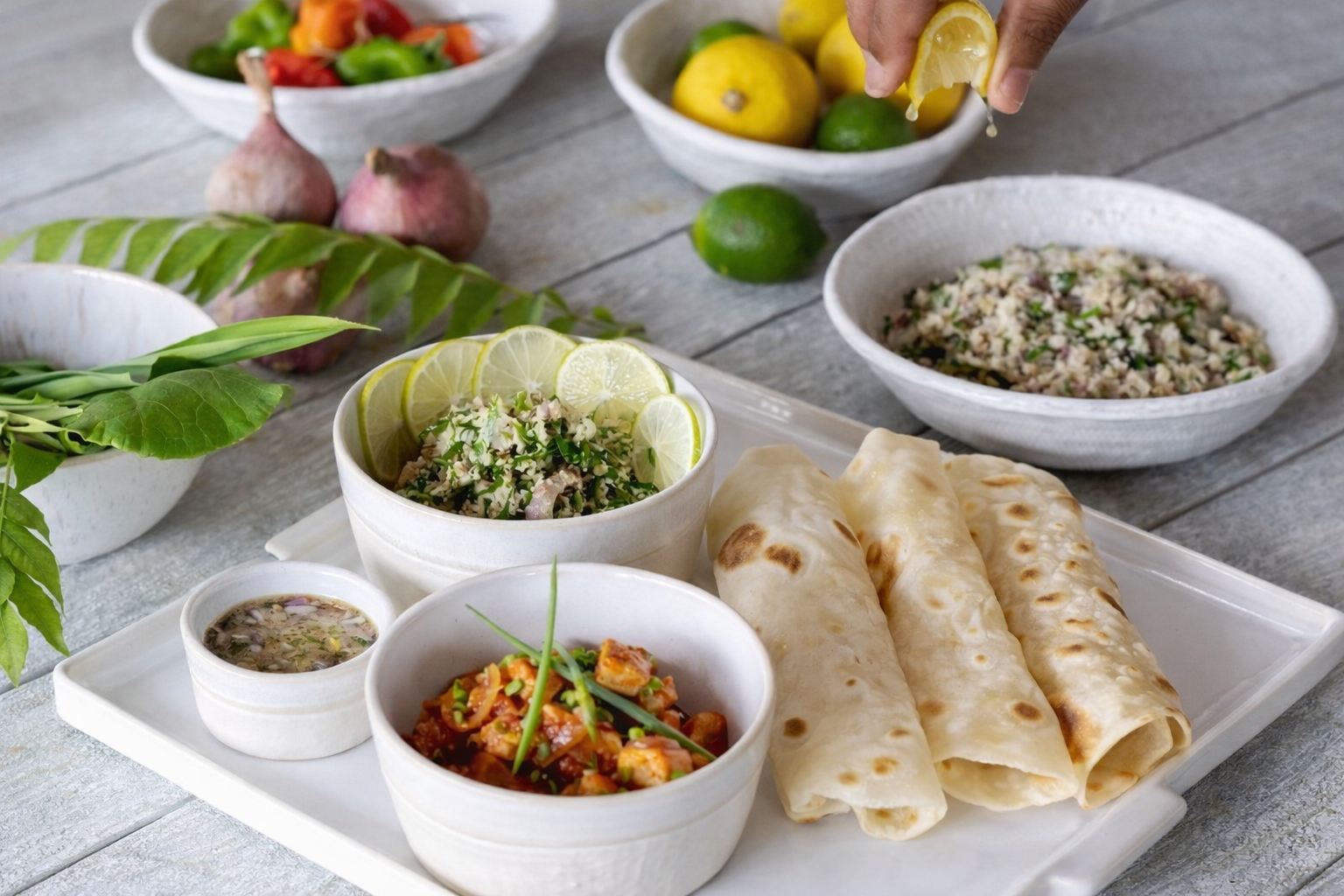
Maldivian cuisine is shaped by the ocean, coconut, and centuries of trade across the Indian Ocean. Tuna is the backbone of the national diet — eaten fresh, dried, smoked, or cooked into curries. Coconut appears in many forms, from grated flesh to coconut milk, adding richness and depth to everyday meals. Rice and flatbreads are common accompaniments, often paired with chilli and aromatic spices.
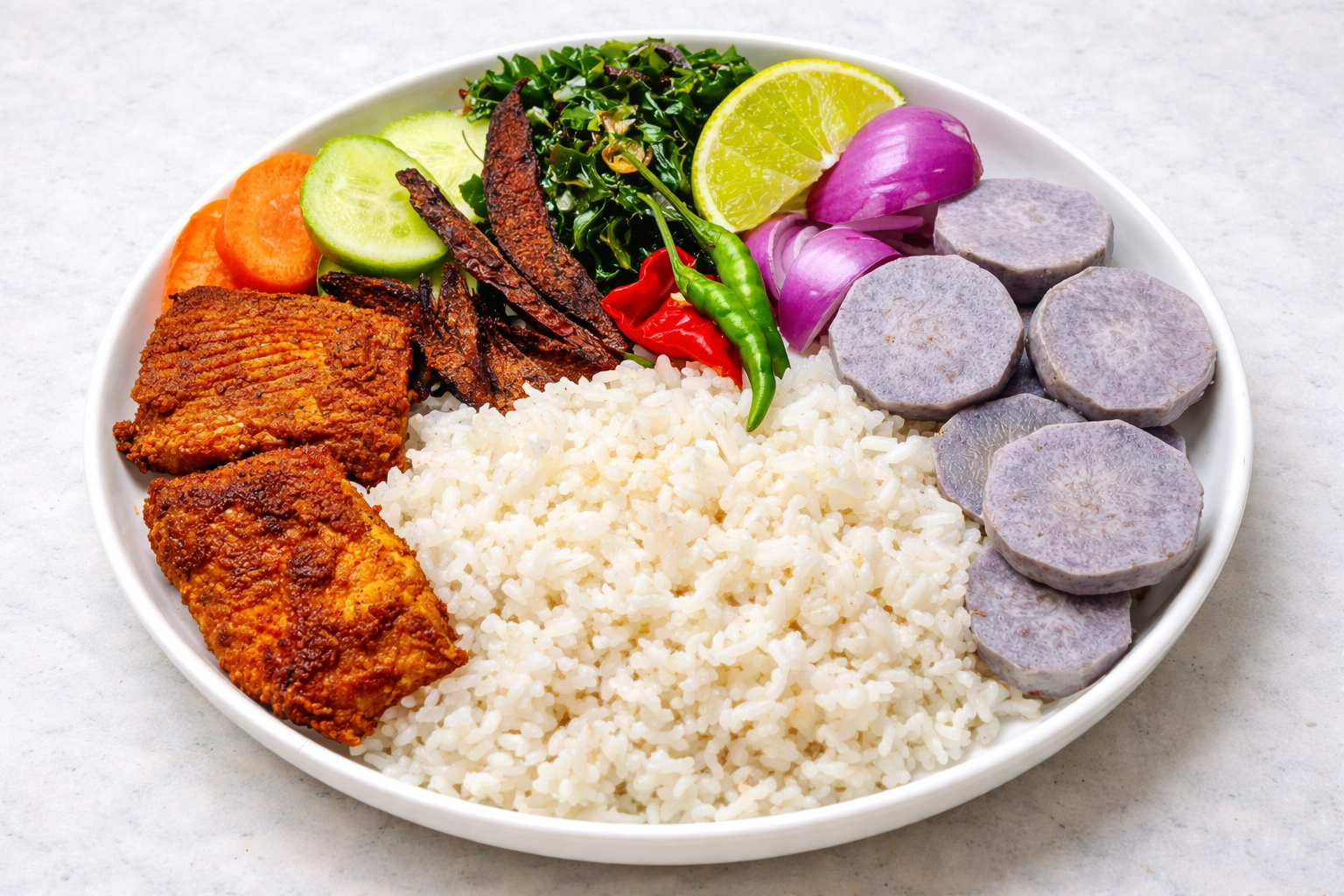
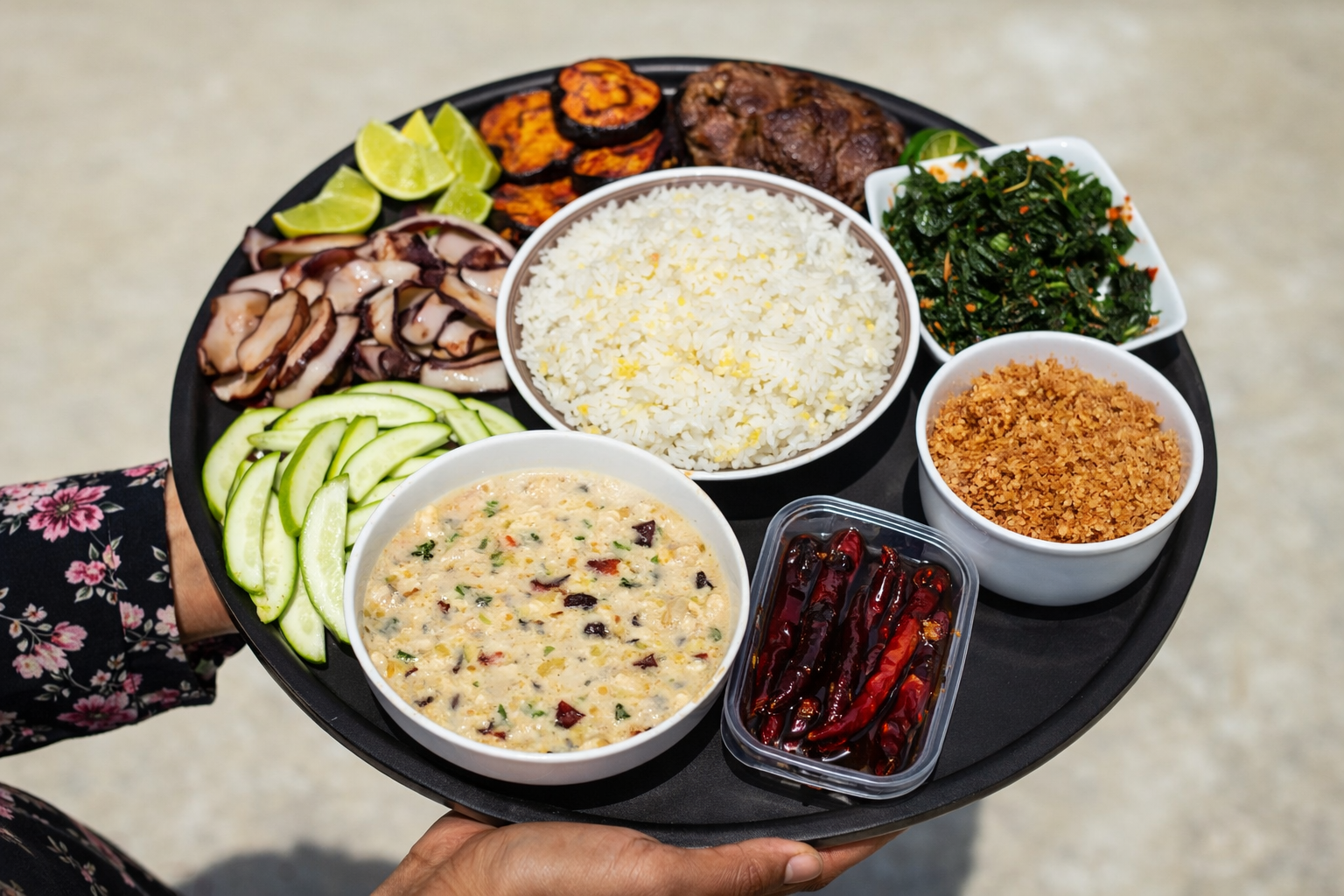
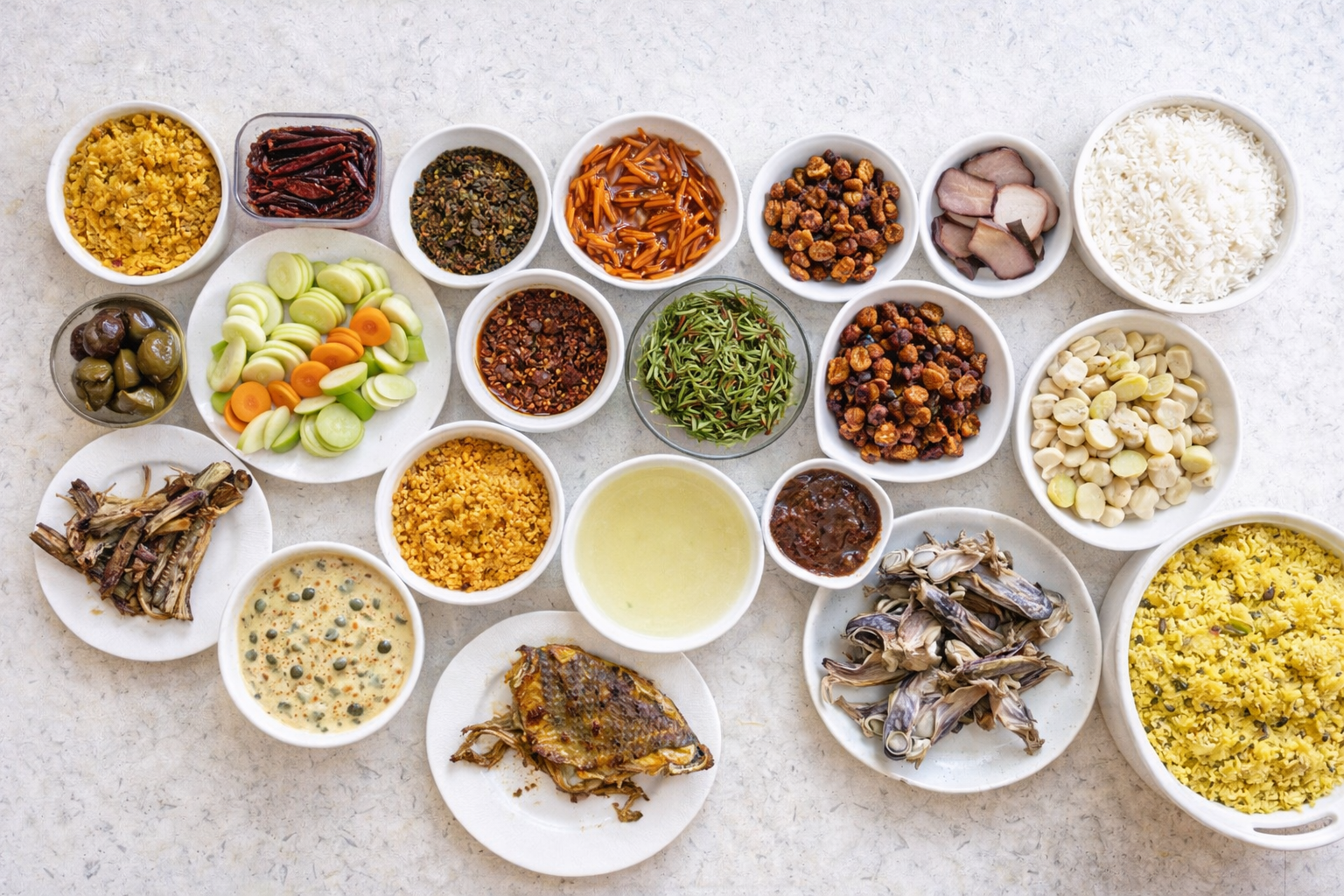
A typical breakfast on a local island might include mas huni — a mixture of tuna, grated coconut, onion, and chilli — served with freshly baked flatbread known as roshi. For lunch or dinner, fish curries are common, along with garudhiya, a clear tuna broth served with rice, lime, and chilli. Flavours tend to be bold but not overly heavy, reflecting South Asian influences blended with local ingredients.
Snacks, known as hedhikaa, are an important part of island life. These savoury bites — such as fish-filled pastries and fritters — are often enjoyed in the afternoon with sweet, strong black tea.
Cafés on local islands typically serve a mix of traditional Maldivian dishes alongside simple international options.
While resort islands often offer a wide range of international cuisine, staying on a local island provides greater exposure to everyday Maldivian food. Meals are generally simple, fresh, and built around what is available from the sea. The flavours are honest and practical — rooted in a fishing heritage and adapted over generations.