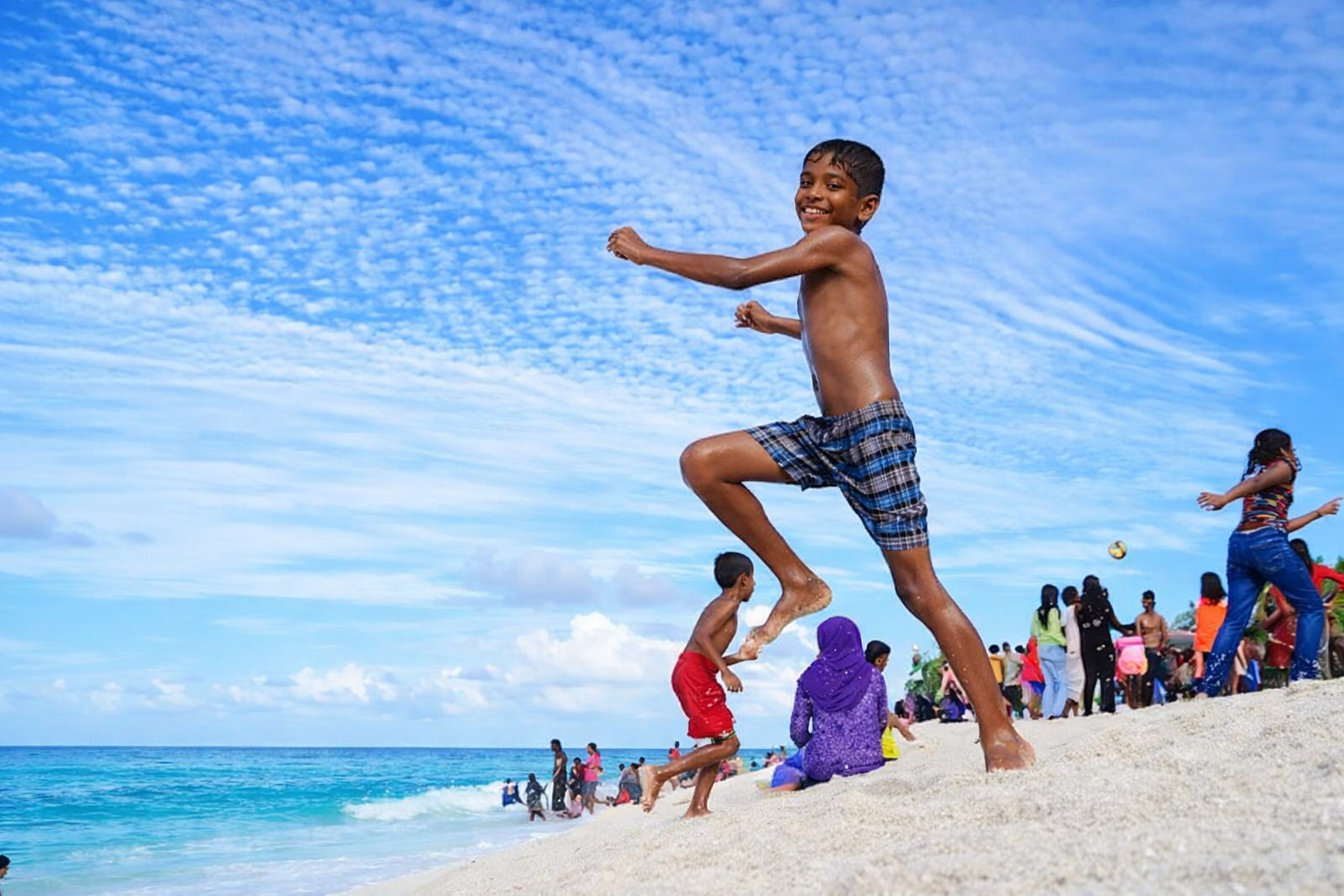
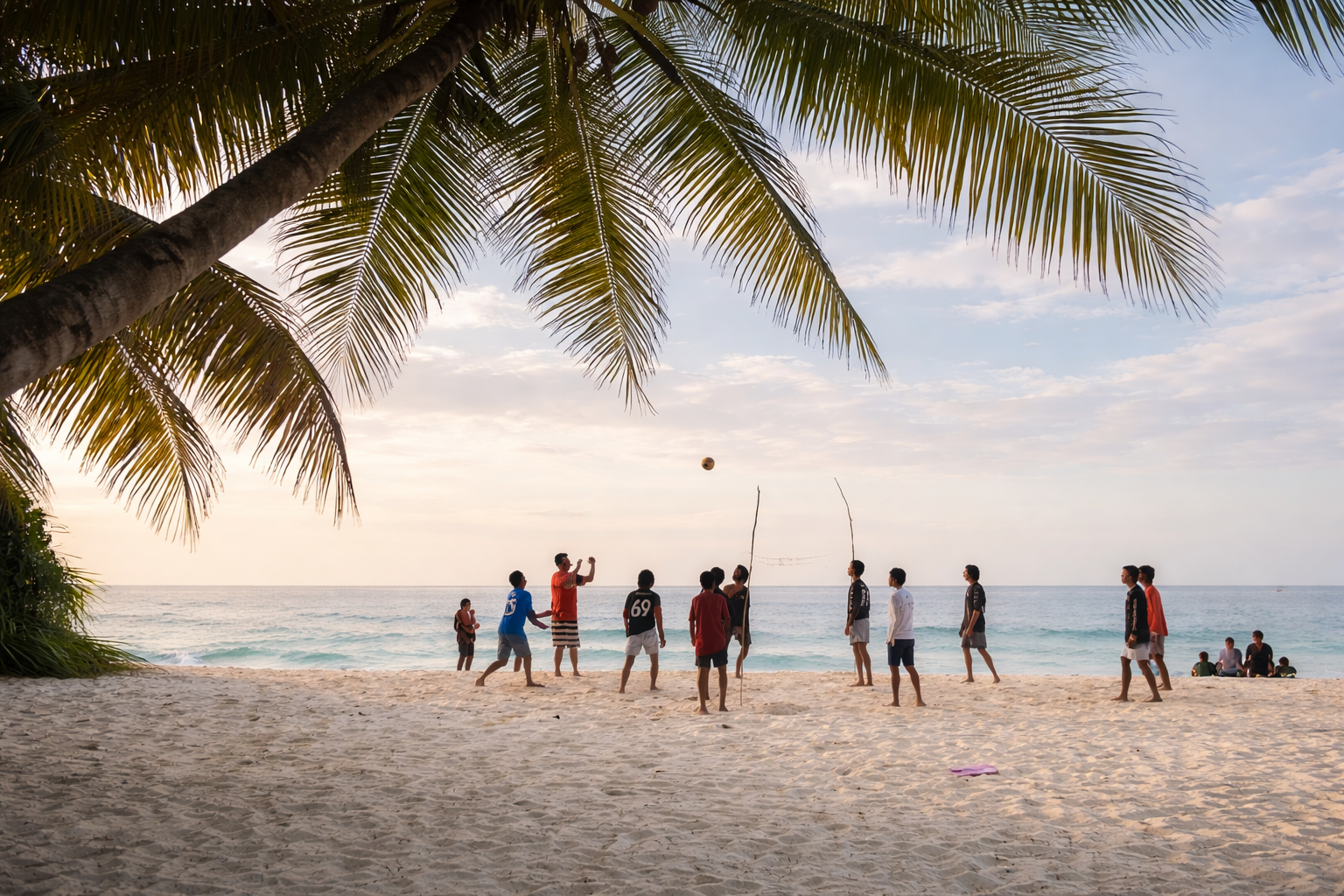
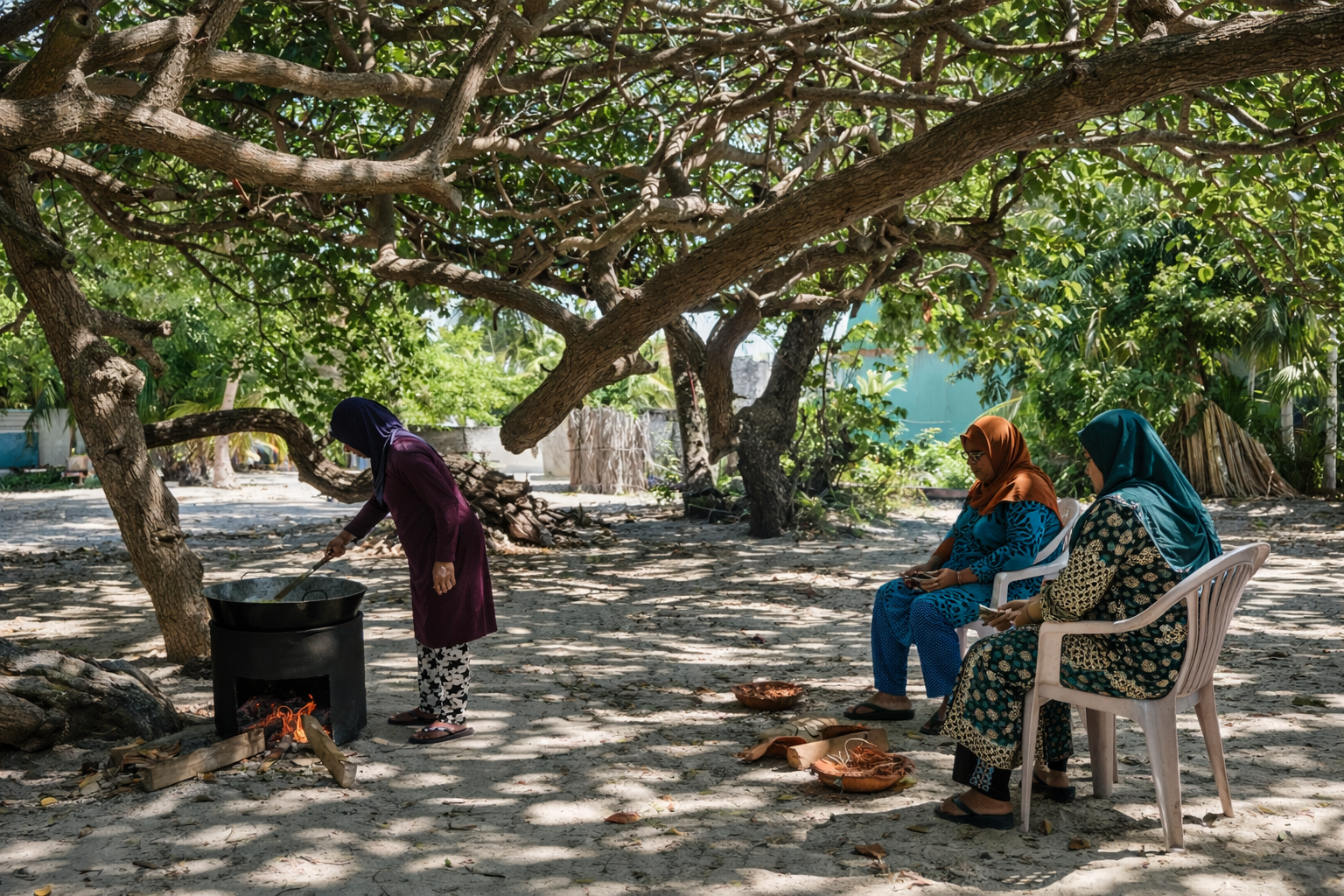
Life on the inhabited islands of the Maldives is community-oriented and closely connected to the sea. Most islands are small, often home to just a few hundred or a few thousand residents. Daily life centres around the harbour, the mosque, schools, small cafés, and local shops. In the evenings, when the heat softens, people gather outside — along sandy roads, by the shoreline, or near the jetty — catching up with neighbours and watching boats return from fishing trips.
Hospitality is deeply ingrained in island culture. Guests are welcomed warmly, often with genuine curiosity and generosity. Whether it is sharing a meal, offering directions, or inviting visitors to a local gathering, there is a natural openness that many travellers remember long after they leave. Respect is mutual — island communities value politeness, modesty, and thoughtful interaction, and visitors who approach with the same mindset are received with kindness.
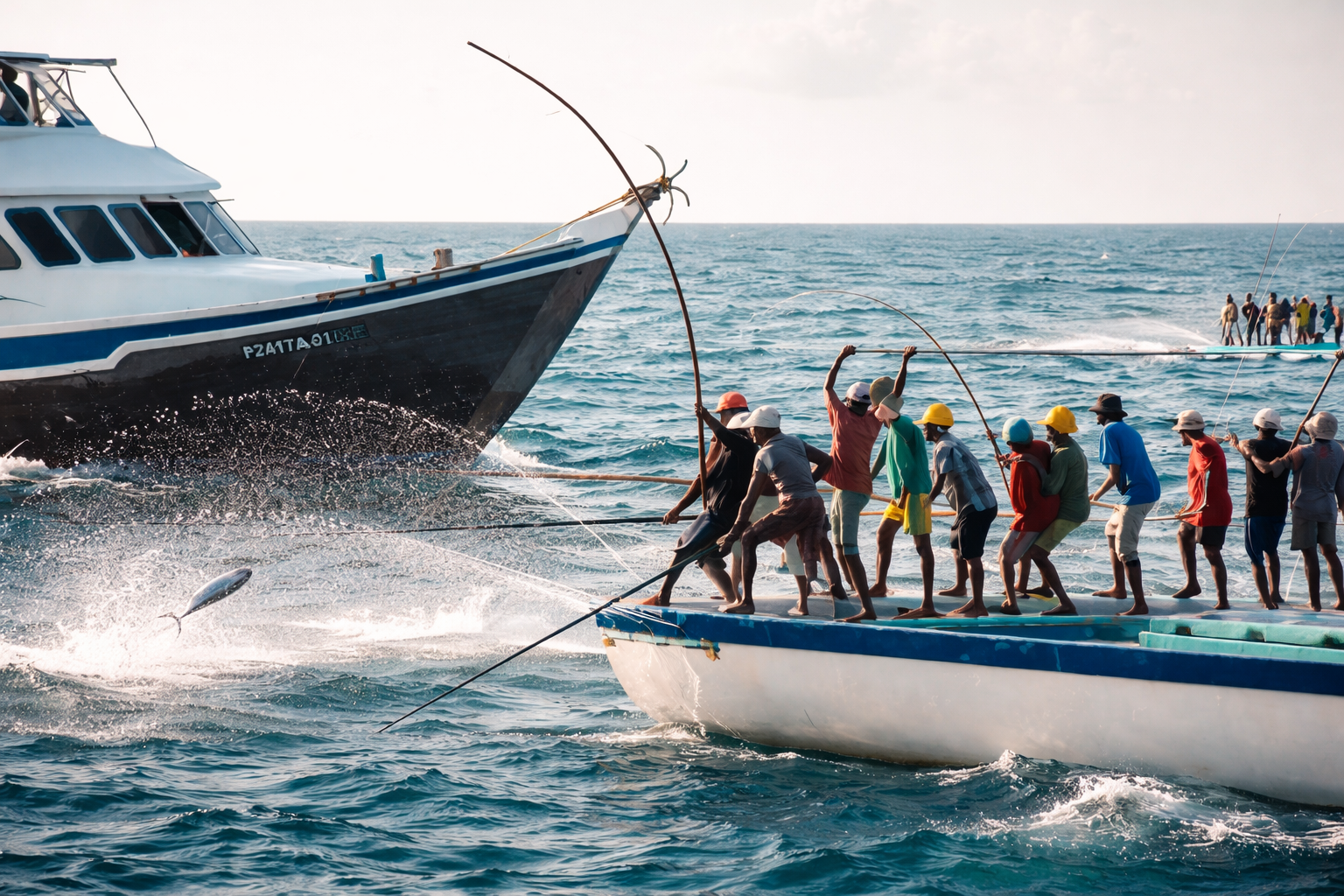
Fishing has historically been the backbone of the Maldivian economy, particularly tuna fishing, and it remains culturally significant even as tourism has grown. Traditional wooden boats known as dhonis are still widely used, although many are now motorised. Food reflects this maritime heritage — tuna, coconut, rice, and chilli are staples, with dishes such as mas huni (tuna mixed with grated coconut and onion) commonly eaten for breakfast.
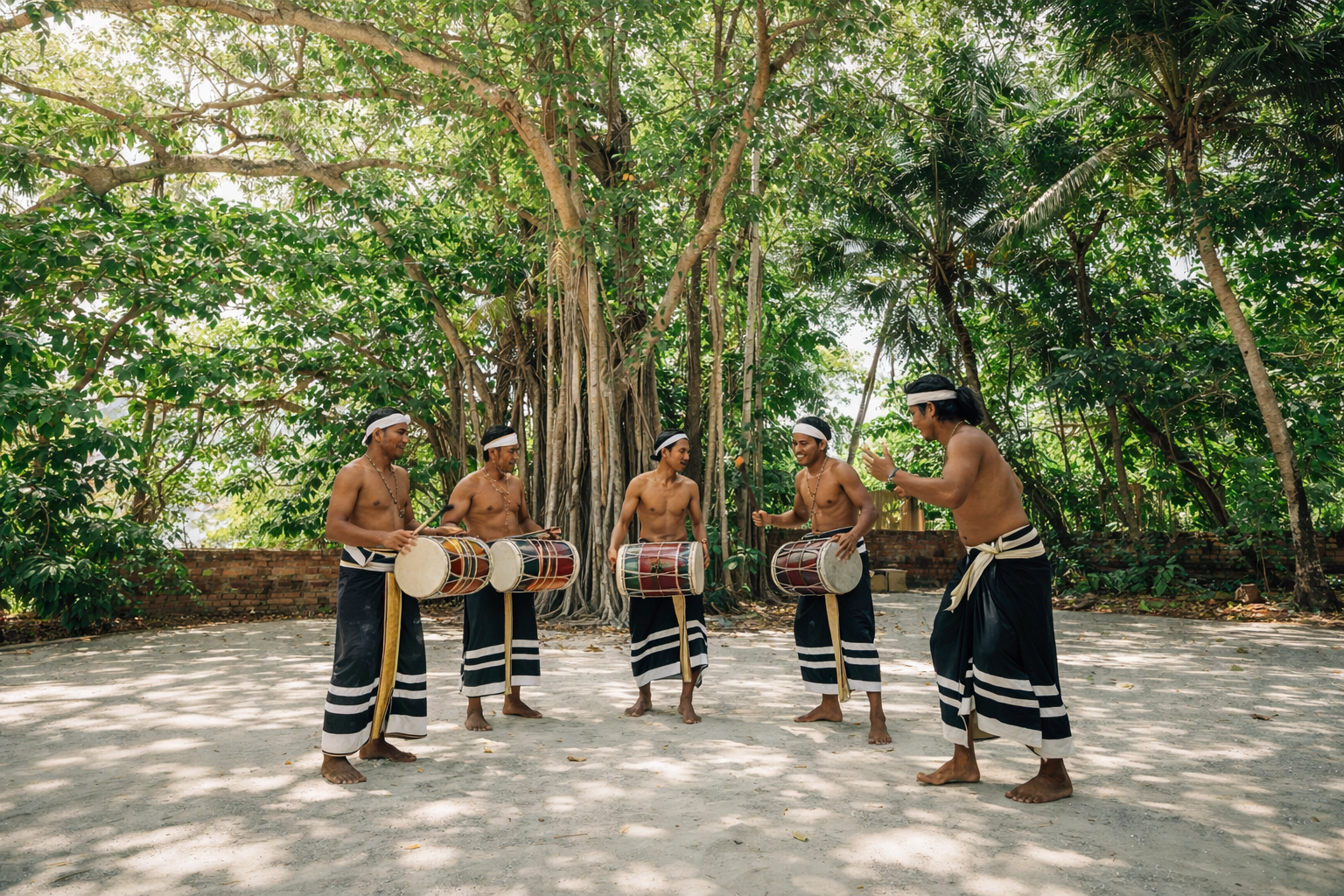
Culturally, the Maldives has been shaped by centuries of trade across the Indian Ocean, with influences from South Asia, East Africa, and the Arab world. This history is reflected in language (Dhivehi), music, and craft traditions. Boduberu, a form of drumming and rhythmic singing believed to have East African roots, remains one of the most recognisable traditional performances and is often seen at community events and celebrations.
For travellers visiting local islands, everyday life is visible and authentic — not staged. Understanding the social structure, religious context, and community values provides important perspective. The Maldives is not only a collection of beaches and lagoons; it is a network of functioning island societies with long-standing traditions, evolving economies, and strong communal ties.