

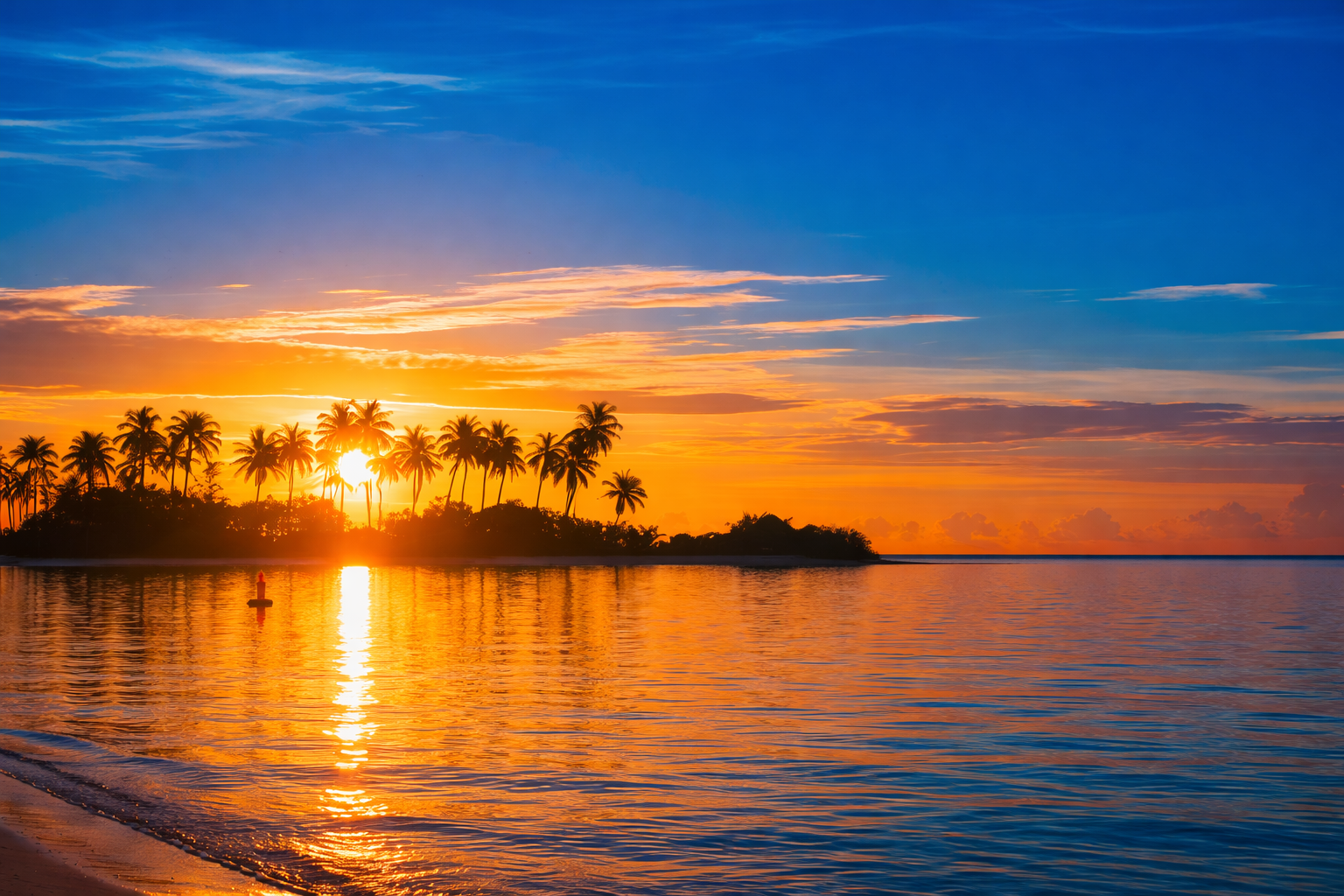
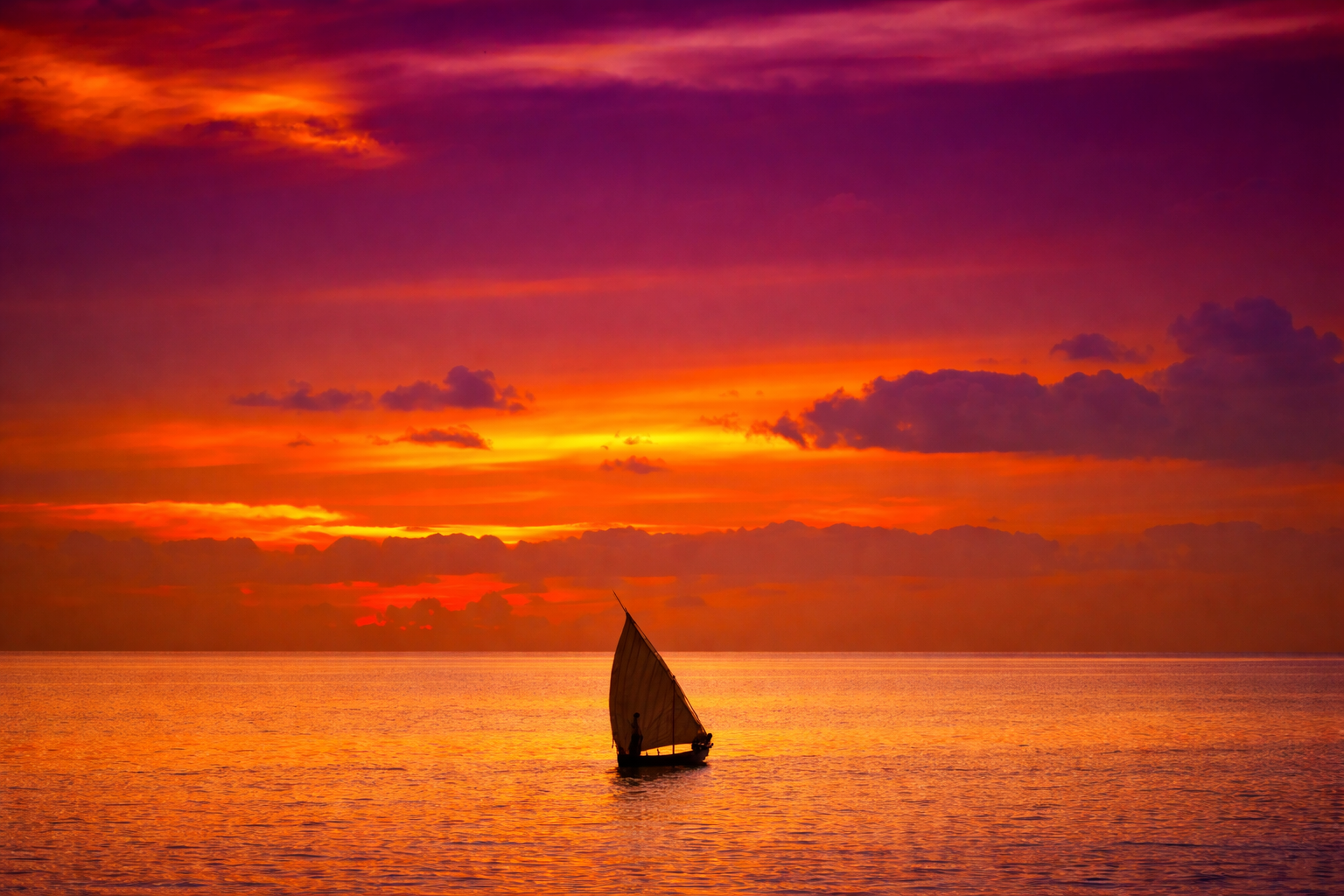
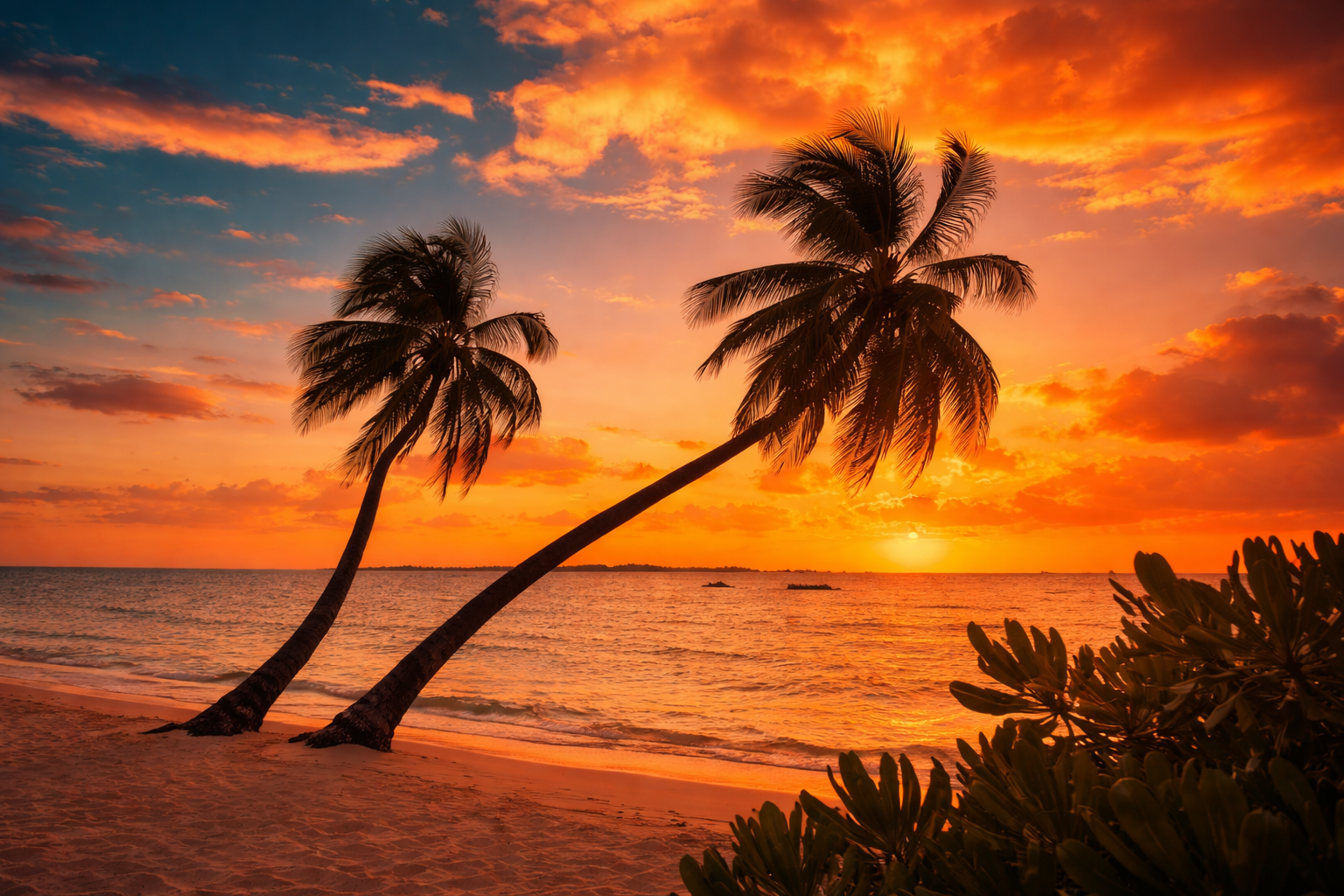
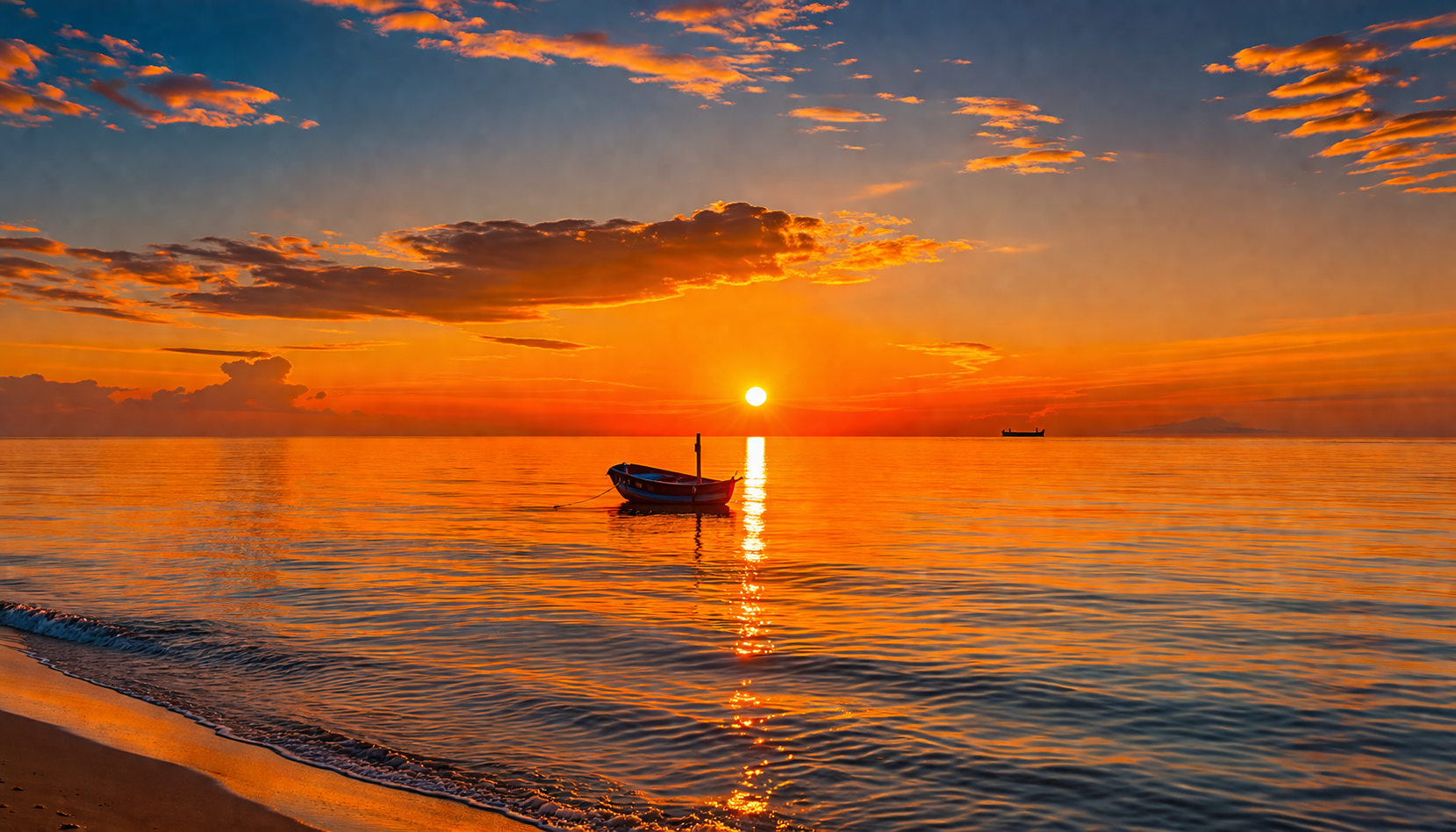
In many places, sunset is background scenery. In the Maldives, it is a moment people pay attention to.
As the afternoon heat softens, island life subtly shifts. Shops grow quieter, fishing boats return to the harbour, and people begin drifting toward the shoreline. Children ride their bicycles along sandy paths. Neighbours sit on low walls facing the water. Conversations slow. The sky starts to change colour almost without notice — pale gold, then deeper orange, sometimes streaked with violet and pink.
Because the islands are flat and surrounded by open horizon, there is nothing to block the view. The sun drops directly into the ocean, uninterrupted. On clear days, the reflection stretches across the lagoon like a moving path of light. After rain, the colours intensify, and the sky can feel impossibly wide.
For fishermen, sunset signals timing — when to prepare for night fishing or return from a day at sea. For families, it marks the transition from work to evening routine. For visitors, it often becomes the first time they truly pause.
There is no announcement. No one tells you to gather. And yet, people do. Sunset here is not staged or scheduled; it is simply understood as something worth watching.
Perhaps it is because island life is structured around natural rhythms — tides, monsoon winds, daylight. Or perhaps it is because, with so much sky and sea, the scale of the horizon reminds you how small and temporary everything is.
Whatever the reason, sunset in the Maldives is rarely ignored. It is noticed. And in that noticing, something shifts — just slightly — in the pace of the day.